Sunday, May 10, 2009

Tapas


Tapas means heat, specifically, the heat necessary for transformation. I'm thinking of a kiln: what goes in the fire comes out unalterably changed.

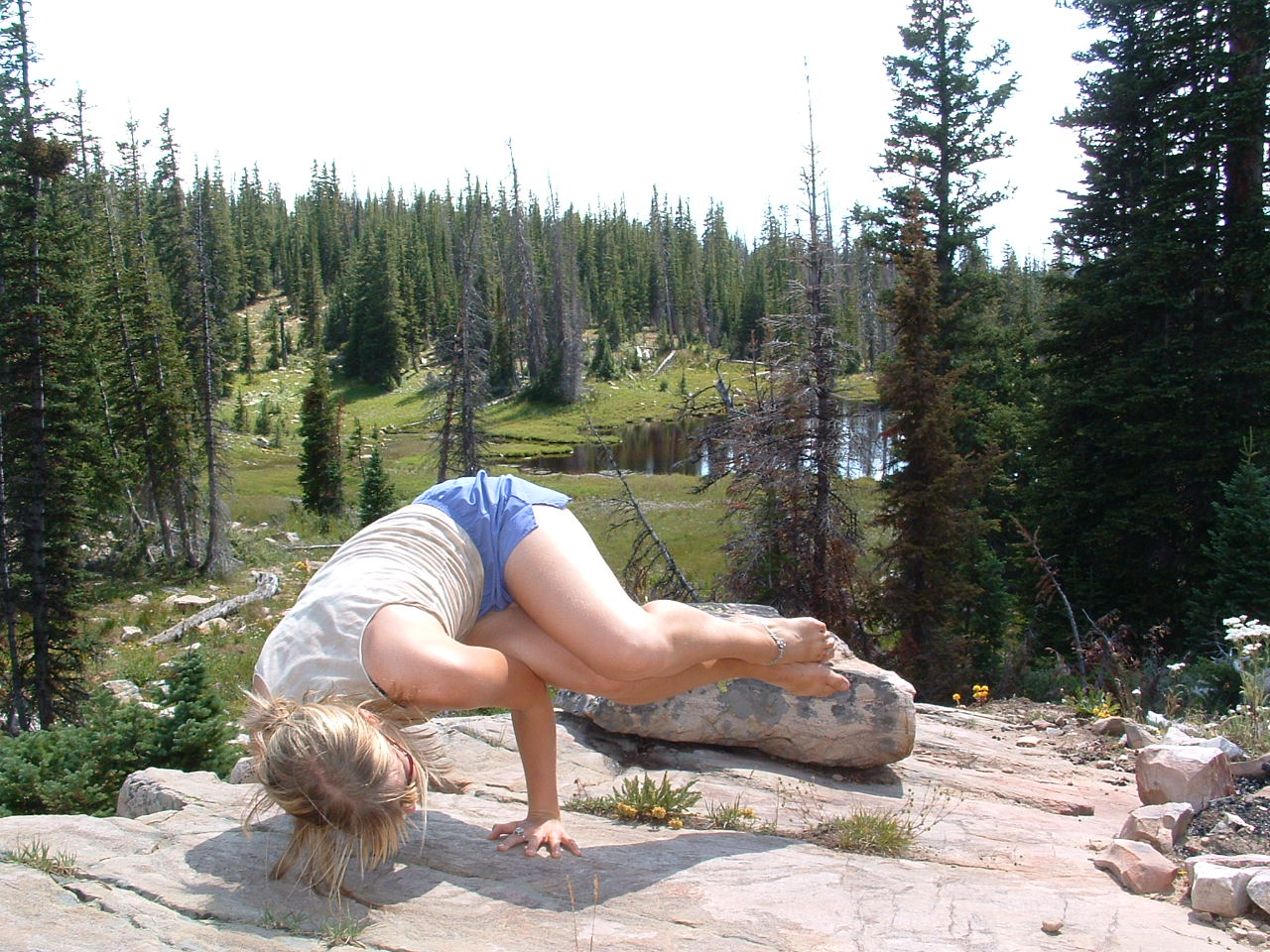
Yoga teaches us that we are all in the process of refinement. We are always in the heat of change, of transformation. This lesson is most apparent in the practice of asanas, the physical poses. Through the heat of postures, we are literally experiencing the heat of our muscles changing as we purify ourselves starting with this outward layer of our body. Not to be misunderstood as a lesser form of learning, our body is our most tactile field of deep learning and awareness.

Tapas isn't only about asanas. Anything that causes us to grow, any friction along our path, be that physical, emotional, spiritual, is making us stronger and is a form of Tapas. Tapas is the necessary heat to shed the previous layer of our old self, like a snakes skin, the misidentification with a self that was less than our True Nature.

Unlike many of the burning challenges we face each day, fortunately we can choose the degree to which we burn in our asanas, the mirror of our daily challenges. In fact, the more skillfully we apply or do not apply the heat to our practice is a lesson itself. We may not be able to set the thermostat of the heat of every-day challenges. Often, our life's challenges rage through us like wildfire. And when it does, we can use the skills and hope (yes, hope) that we've found in yoga practice to focus this heat productively toward our refinement, or at very least understand it as such, instead of feeling like we're burning out of control like a lunatic with their hair on fire.

Unfortunately, we all burn. Fortunately, we are all in this sacred ceremony together, becoming the able vessels of a divine spirit.

Sarah Mclachlan expresses this beautifully in her song Witness.
Hear her song and watch a video. Here are the lyrics.

Make me a witness
take me out
out of darkness
out of doubt

I won't weigh you down
with good intention
won't make fire out of clay
or other inventions

Will we burn in heaven
like we do down here
will the change come
while we're waiting

Everyone is waiting

And when we're done
soul searching
as we carried the weight
and died for a cause
is misery
made beautiful
right before our eyes
will mercy be revealed
or blind us where we stand

Will we burn in heaven
like we do down here
will the change come while we're waiting
everyone is waiting

Scott

Sunday, May 3, 2009

Jala Namaskar


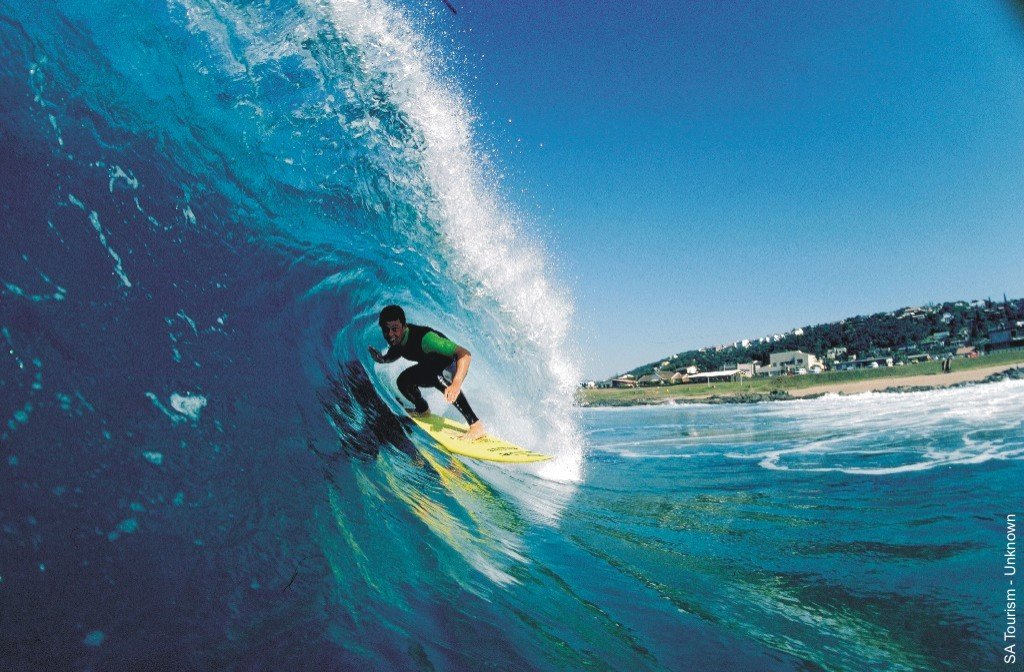
Jala means water. Namskar is a deep honoring, a sequence of bows. In most yoga classes, we regularly perform Surya Namaskar, or sun salutations. You may recognize Namas as the first part of Namaste, the word we honor each other with at the end of practice which essentially means, “I honor the Divine in you.” So, Jala Namaskar is the act of celebrating the essential fluid nature of things that are. Its about riding the wave.

The energetic junctions in the body are called Chakras. These spots also relate to certain elements or qualities. The second Chakra, physically located in the lower abdomen, relates to our ability to creatively ride the wave of life. Its element, therefore, is water, Jala.

A month or so ago, I spent some time swimming in the ocean. As I was learning to body board, the ocean taught me something powerful. It told me quite matter-of-factly, “We can either be partners and dance, or I can kill you.” And it was true. I learned again that there was enough power in one wave to obliterate me from the planet, let alone the eternity of waves in cue behind it.

As I would swim on my body board searching for waves, close waves would begin to crash down and I had to dive under the wave and let it pass over me. I spent hours, frustrated and water-logged, trying to learn how to dance with the waves, learning how to move against them and learning how to let them carry me.

I also learned that to swim in the ocean is to learn the lovers’ dance of rise and fall, of motion and breath, each wave expressing an endless pulse.

In the distance I would see a wave begin to swell and even from afar I could feel its immensity. Its fluid force was both ominous and inviting as it rushed toward me, closer and closer. Like all events of existence, the yet unseen outcome of these moments had already been set in motion. And like the ocean itself, all events have always been in motion. I felt stagnate floating in the ocean, hovering in something that is in constant flux. I was stale immobility, vulnerable to the eternal motion of the sea, this force that is both savior and at the same time the destroying angel. Soon, the wave was almost upon me. Its pregnant crest had risen to such a zenith, its motion in such a climax, that as I lay on my board watching this wall of water approach me, I shivered with the tight anticipation of a wave that would inevitably crash its dense, rushing weight in a solid, blunt roar and quickly consume anything it found in weak opposition.

It was here. Its jaws gaped toward me and I swam like hell, pulling, kicking, fighting against the water to somehow contend with this fierce, beautiful woman, the ocean-water, Jala. And then it happened. I somehow slipped or pulled myself into its graces and it lifted me. I stopped struggling and it carried me in its breath as we flew together through space in the lovers dance. We were dancing together. Nothing else existed, not sun, not earth, not wind, just me and water as it cupped me in its curled palm moving together in space without time, in the fluid motion of things as they are.

Join me and my friend Aki Rich this Friday night (ccy 7:30) as we explore Jala Namaskar and learn to mirror each other in the dance of fluid balance.

Sunday, April 26, 2009

Riding the Wave

What we need, what we really want is here. Now. It's about learning to get still and allow your mind to process exactly what's happening at this moment. Don't second guess, rationalize, justify. Simply be honest with yourself about what is real for you in this moment. There is nothing good or bad here. There is only the reality of what is.

So, rather than spending enormous amounts of time planning for a future that logically sounds like a good idea, how about instead getting really clear with what's going on with you in this moment. Sink deep inside yourself and get really clear with your current emotions, thoughts, worries, fears, joy, pain, grief, etc. Once we are clear with what is, with what makes us feel alive, (knowing that all of this could change tomorrow) we've established where we are on our map of our path, our Dharma. Then, with this real information we can skillfully choose our next step. We'll begin to see where our destiny (Dharma, the path of our life, our Truth) begins to direct us. As we bravely follow this path, nothing will feel so natural. Then we can offer another step forward toward a direction that makes complete sense. This doesn't absolve us from problems, but at least we'll know that we are leading the life that was meant for us.

I was recently invited to participate in a sweat lodge ceremony conducted by a Lakota medicine man who travels the world sharing sprit. He is very gentle, honest and real. Together he and I were preparing for the ceremony by digging the fire pit and began talking. These are often my greatest teaching moments, indeed part of the ceremony. I asked him how he made his connections all over the world. He stopped digging rocks, put his hands on his shovel and looked me in the eyes and said, "I'm surfing. I'm just riding the wave of my passion and this is where it takes me. Are you following your passion?" He was asking if I was following my Dharma.

Are you following your passion? Come to yoga, get still, and see where your Dharma is leading you.

Sunday, April 19, 2009

Coming Home


Sometimes it feels like we are a house-full of sorrows. Every corner, under every piece of furniture, in every drawer, memories, thoughts, regrets, disappointments, worry, grief. It's all there and what do you do with it?

The ancient Sufi poet Rumi suggests we welcome our sorrows, make them a cup of tea, sit, and listen.

In the highly relative world of emotion, one thing that is certain is that those sorrows do exist, at least for the moment. They feel so real because we can feel them. This is countered by another thing which is true which is: when we learn to uncover our True Nature through practices such as meditation and yoga, we see clearly that what we are is deeper than even these pervasive, transitory emotions which seem to rule our lives. From the grand perspective of our True Nature, which, the ancients say and invite us to discover for ourselves, is boundless equanimity, we allow ourselves to experience our emotions fully, knowing that when all is said and done, our emotions will come and go but this True Nature will stay constant. By experiencing our emotions from this perspective, often these sorrows seem to get whatever it was off their chest, finish their tea, and then see themselves out. Regardless, each thing that comes to our door, like Rumi says, is our teacher.

In yoga, it's nice to know that we're not trying to "fix" anything but rather simply uncovering the most True part of ourselves, the part that is not subjective like our emotions. Plus, it just feels really good to be with that True part of ourselves. It's like coming home.


The Guest House
This being human is a guest house.
Every morning a new arrival.

A joy, a depression, a meanness,
some momentary awareness comes
as an unexpected visitor.

Welcome and entertain them all!
Even if they're a crowd of sorrows,
who violently sweep your house
empty of its furniture,
still, treat each guest honorably.
He may be clearing you out
for some new delight.

The dark thought, the shame, the malice,
meet them at the door laughing,
and invite them in.

Be grateful for whoever comes,
because each has been sent
as a guide from beyond.
~ Rumi ~

Sunday, April 12, 2009

Yoga Nidra


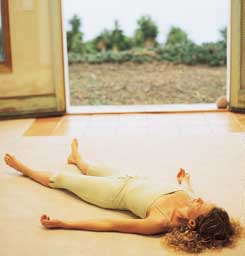
Yoga Nidra is yoga where we find our True Self by exploring all of our complex layers in a way to see that who we are, fundamentally, is bigger than those simple layers. We call these layers Koshas.

Some of the Kosahs include a body layer, an energy layer, a mind layer, and so on. By exploring these layers through simple means of listening to a guided narrative, we can experience ourselves just as we are but against a backdrop of our own awareness--our consciousness. From the bigger place of our awareness, we see that those smaller parts of ourselves, like body or illness, emotions, thoughts, though still important, don't have to monopolize all of our energy and attention.

Through this process of Yoga Nidra, many of our problems (physical, emotional, etc) seem to sort themselves out because it's like they finally find their own role in the bigger scheme of who we are. Our problems often stop the narcissistic show of attention they've been asserting all this time.

Perhaps the best thing about Yoga Nidra is that it's for everybody, old young, beginners, pros. Everyone. Plus, all you have to do is lay there and listen to the facilitator talk. And pay attention. It's very relaxing. Many people say that after Yoga Nidra they feel like they've had a long nap.

Once, after a session of Yoga Nidra, I felt like I was as big as the whole universe and as small as the smallest particle at the same time. I felt like everything was okay and my old problems seemed important but relatively insignificant from this larger perspective. This largeness, this awareness seemed to be choosing to live in my body and it was my job to experience this awareness in the form that I had been given.

While still blised out, in my mind I felt curious about this body in which I was experiencing this awareness. I had an urge to pull over to the first fast-food restaurant I found and stuff myself with tasty but unhealthy food. Fortunately I was aware enough to realize that though my awareness may exceed my body, I was still attached to it and as my vehicle for this awareness, I'd better take care of it.

That same night, I went home, put on some jazz music, sat in my favorite chair and simply cried. Life seemed all so close and present to me. It felt like all that mattered was this moment.

Sunday, April 5, 2009

Feed What You Love


I love The Tandoor Grill (Indian restaurant) because they were my neighbors, they are my dear friends, and the food is amazing.

I love the Hatch Family Chocolates because they are local, friendly, and an integral part of my Thursday morning ritual: treat myself to a saxophone lesson, then treat myself to chocolate at Hatch just down the street. (Click here to read something I wrote: Alive on Jazz and Chocolate).

I tote my yoga mat in a beautiful bag made by my good friend and master seamstress Kiri Manookin. It was made just for me and made for me with love.

When my car needs repair or service, I take it to John Peake because he's a solid, honest friend and because he's the best mechanic I've ever known.

I love the Band of Annuals because they are a tight, original band first and because they are local second.

When my good friend said that her daughter was selling Girl Scout cookies, I told her that I'd buy 1 box of each kind because they make great gifts and it supports a special little person. Besides, those Samosas are better than crack.

When Karen Baynard came up with her line of gorgeous natural, healthy, delicious ice cream, I jumped for the opportunity to buy, for her first and for the ice cream second.

In a world of chain restaurants and big box stores, it's nice to know that you can choose to spend your money and energy on products and people that have soul and support those you care about.

This follows an important yogic principle of Samtosha or contentment(rhymes with Samosa). Perhaps better said, Samtosha is the spiritual practice of choosing to be happy with what you have and choosing to love those things around you. It's about refining your taste for what's around. And like in the famous book The Little Prince, what we choose to cultivate in our world becomes sacred to us.

One of my teachers told me once, "You have to feed what you love." It's nice to know that every time you go to yoga at a local studio, you support local business. Every yoga instructor at these studios is essentially an independent contractor and therefore also a local business. This is by no means a way to guilt you into coming to yoga. I'm just belaboring my point.

By supporting what you love, you give someone else the opportunity to give what they love and both benefit. This is why local business is so rewarding. This is why things like the Farmer's Market is so fun. It's a true connection with people, like everything else. This is yoga.

I invite you to notice those things around you this week and feed those things that you love.

I hope to see you in yoga this week.

Scott

Sunday, March 29, 2009

The Frontier

Whether we are new or seasoned practitioners, our objective in practice is always the same: to step up to the the comfortable relationship with our edge. That invitation to step to our edge is so provocative! It suggests leaving the comfort of what we know and move toward our yet unknown greatness.

I like the word "frontier." In my mind, it conjures images of rugged people working with the land and wrestling with the unknown, growing and learning and being present with a life that is bigger than them but in which they play a part. The word "frontier" suggests perhaps our edge, our limit of experience or ability. It is the place which we have never been.

I think that whether you are working at a frontier of mindfulness, spirituality, or physicality, to place yourself at that edge of your experience is to truly live. Being at the edge isn't always easy but it is always real.

Simply being at our edge, we become stronger, literally in the case of asanas, but in every aspect of living, we find ourselves more and more able to sit in the heat of our own growth and the inevitable unfolding of the unknown. Because we have to be observant at that edge, we will notice the miracle of what we've created by being there. It's the miracle of watching our frontier, limitations we thought were so fixed and immovable, recede away from us. So that where we find ourselves is no longer the limit of our experience or ability. I could only touch my knees when I began practice, now I can touch my toes. I could only focus for a few seconds when I started, now I can stay in rapt attention for several moments. I barely understood myself before, now I see a divine creature unfolding.

As this edge recedes, we are again provoked by our own potential to take another step closer toward that edge. And again we find ourselves at the familiar relationship and distance with our frontier. Periodically, we may look back to see all the ground we've covered. That growth is a nice reminder that we're moving in the direction of our intention but ultimately secondary to what's real and present and constant--our commitment to be at the frontier. Our commitment to growth.

Until one day we realize that this is where we've set down our roots, in the paradox of constant movement as we chase our frontier, the eternal growth toward our highest self. We have arrived as we witness our own evolution.

Scott